
This classic beef stew is the cold weather comfort food that has been earning its place on dinner tables for generations and continues to be the most satisfying thing in a bowl when the weather turns. Stew meat dredged in flour and seared until deeply browned, simmered low and slow in a rich beef broth with tomato paste, Worcestershire sauce, onion, carrots, celery, thyme, and sage, with baby potatoes added halfway through to cook to buttery tenderness while the beef becomes fall-apart soft in the most deeply flavored broth you have made in your kitchen. Two hours, one pot, and a stew that tastes like it has been simmering all day.
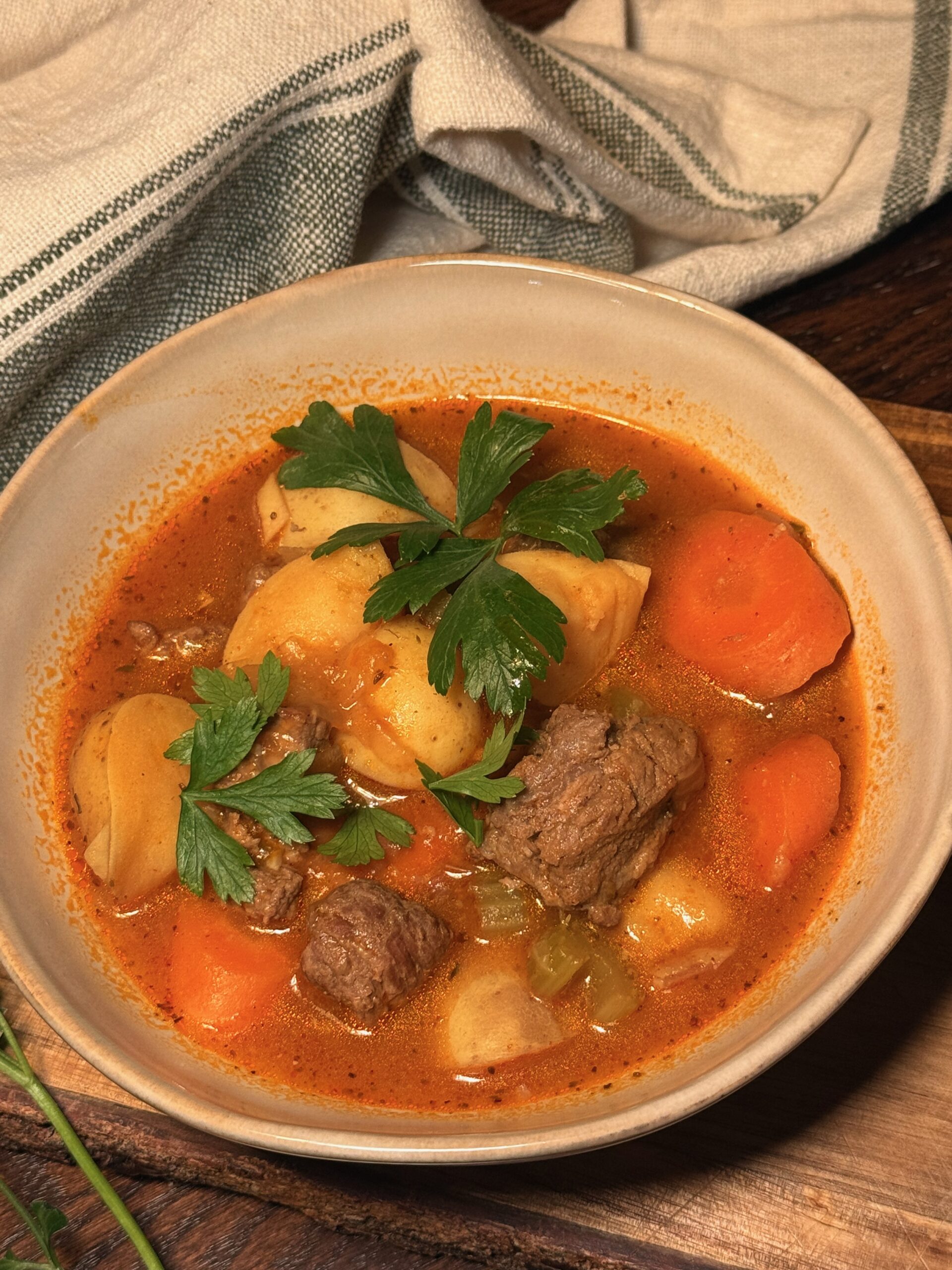
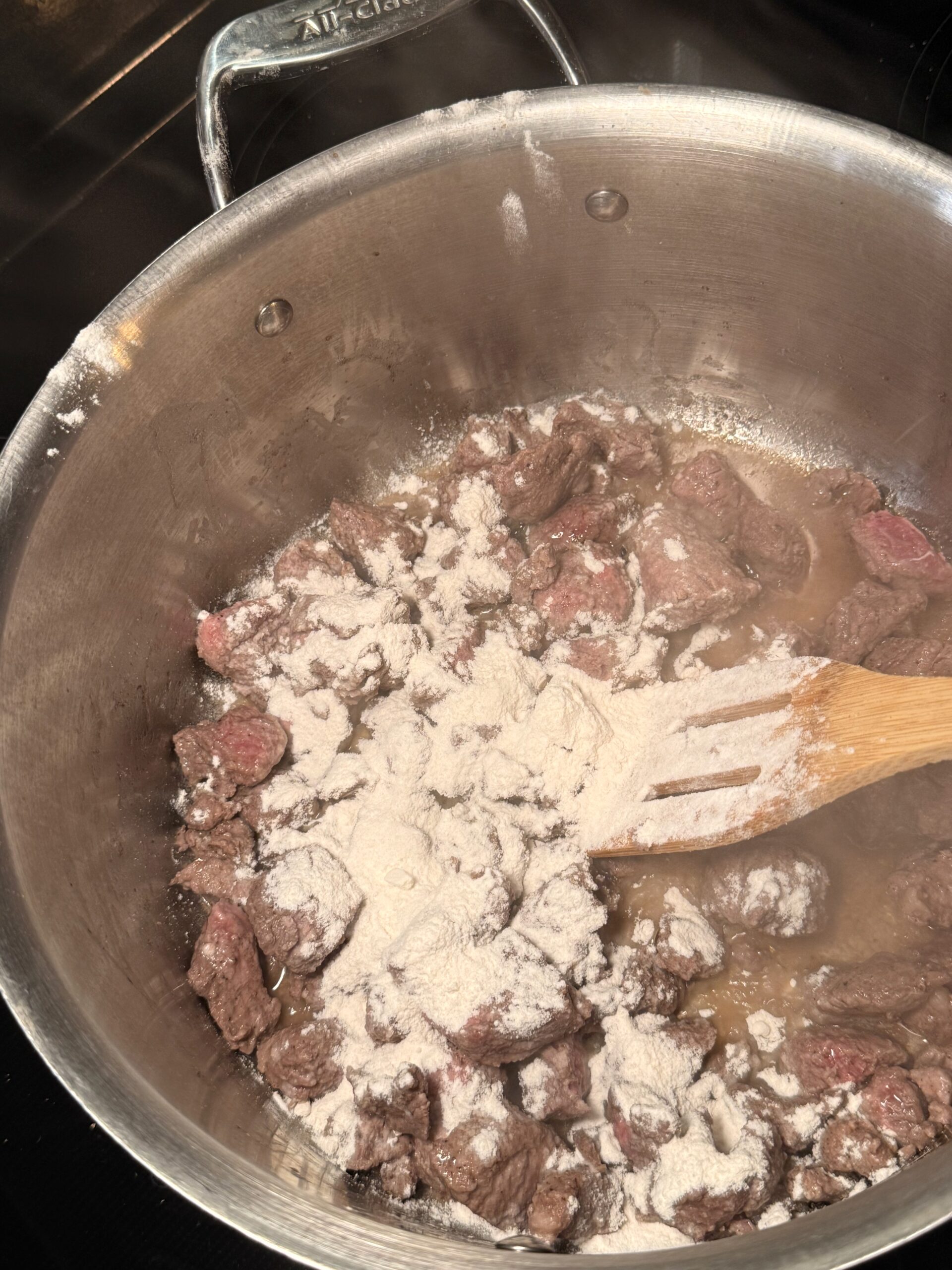
The flour-coated sear is the foundation of everything that makes this stew great. Tossing the stew meat in flour before browning creates a seasoned, caramelized crust that does two things simultaneously. It builds the fond on the bottom of the pot that becomes the flavor base of the entire stew when the broth is added. And it releases starch into the broth during the long simmer that naturally thickens the liquid into the rich, glossy, spoon-coating consistency that defines a properly made beef stew.
Why You'll Love This Recipe
One Dutch oven handles everything from the sear through the long simmer. No transfers, no additional equipment, and one pot to clean.
The flour-dredged sear thickens the stew naturally during cooking. There is no need for a separate cornstarch slurry or roux at the end.
The long, low simmer is entirely hands-off. Once the broth goes in and the lid goes on, the stew takes care of itself for the next hour and a half while the beef breaks down and the vegetables become perfectly tender.
This stew is genuinely better the next day. The flavors deepen overnight and the broth becomes even richer and more cohesive after a night in the refrigerator.
Ingredients Needed to Make Classic Beef Stew
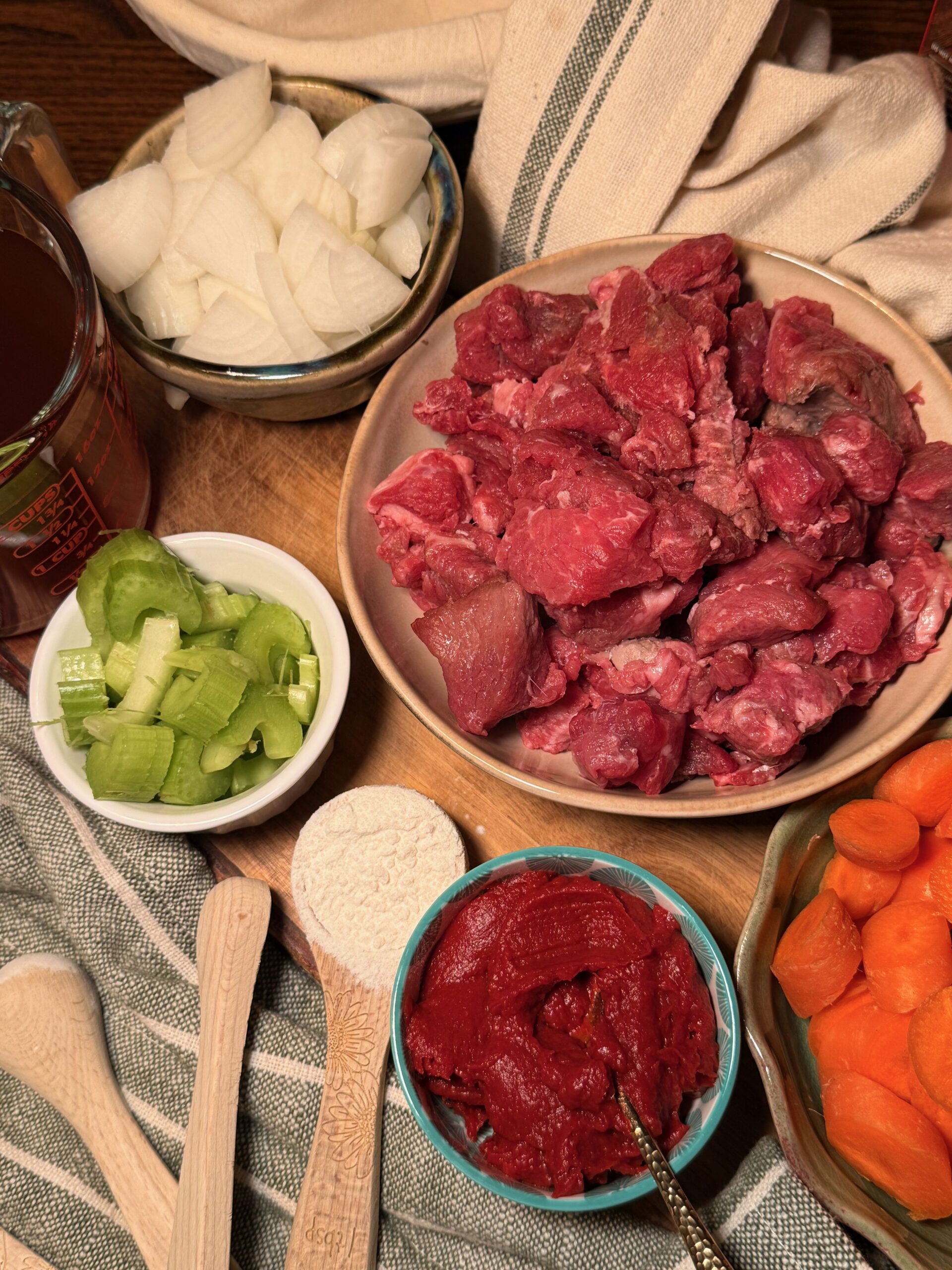
One pot and simple pantry ingredients. Here is what you need.
The Beef
Stew meat, typically chuck roast cut into cubes, is specifically designed for low and slow cooking. Its high collagen content breaks down into gelatin during the long simmer, which thickens the broth and keeps the beef incredibly moist and tender throughout. The flour coating before searing develops the crust and thickens the stew during cooking.
The Vegetables
Baby potatoes diced hold their shape better during the long simmer than larger potatoes cut into bigger pieces. They are added halfway through so they become tender without completely breaking down. Onion, carrots, and celery are the classic aromatic base that build the flavor foundation of the stew alongside the beef.
The Flavor Builders
Tomato paste caramelized briefly in the pot adds a concentrated, slightly sweet tomato depth. Beef broth provides the liquid base that absorbs all the flavor from the seared beef and vegetables. Worcestershire sauce adds a tangy, slightly sweet umami note. Dried thyme and rubbed sage add warm, herby depth throughout.
How to Make Classic Beef Stew
One Dutch oven, two hours.
Step 1: Flour and Sear the Beef
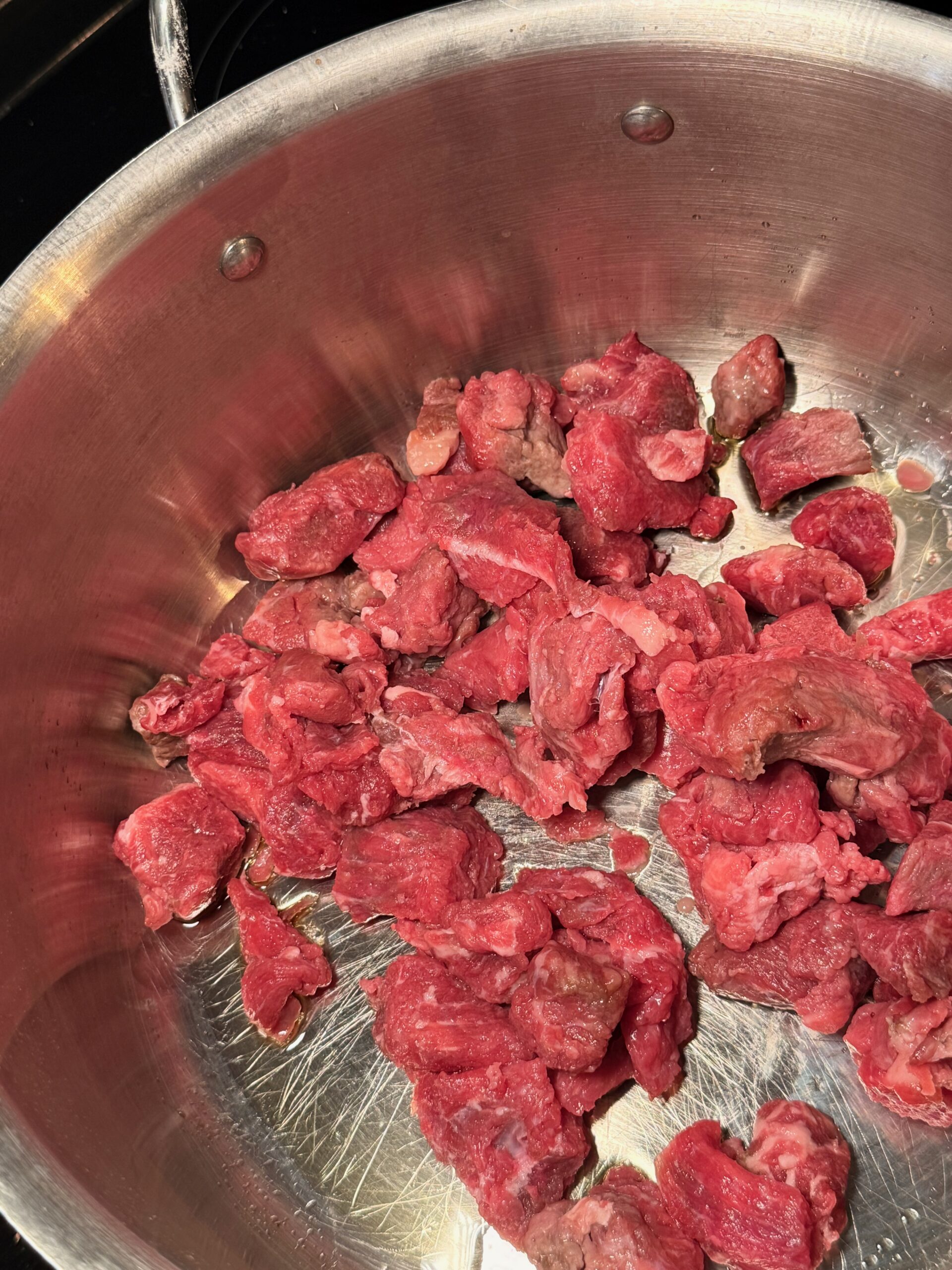
Pat the stew meat completely dry with paper towels. Season generously with salt and pepper. Toss the seasoned beef with the flour until every piece is evenly coated. Heat the olive oil in a large Dutch oven or heavy-bottomed pot over medium-high heat. Working in batches of 6 to 8 pieces at a time, add the beef in a single layer and sear without moving for 3 to 4 minutes until deeply browned on the first side. Turn and sear the remaining sides. Remove each browned batch and set aside. Do not wash the pot between batches.
Step 2: Sauté the Vegetables
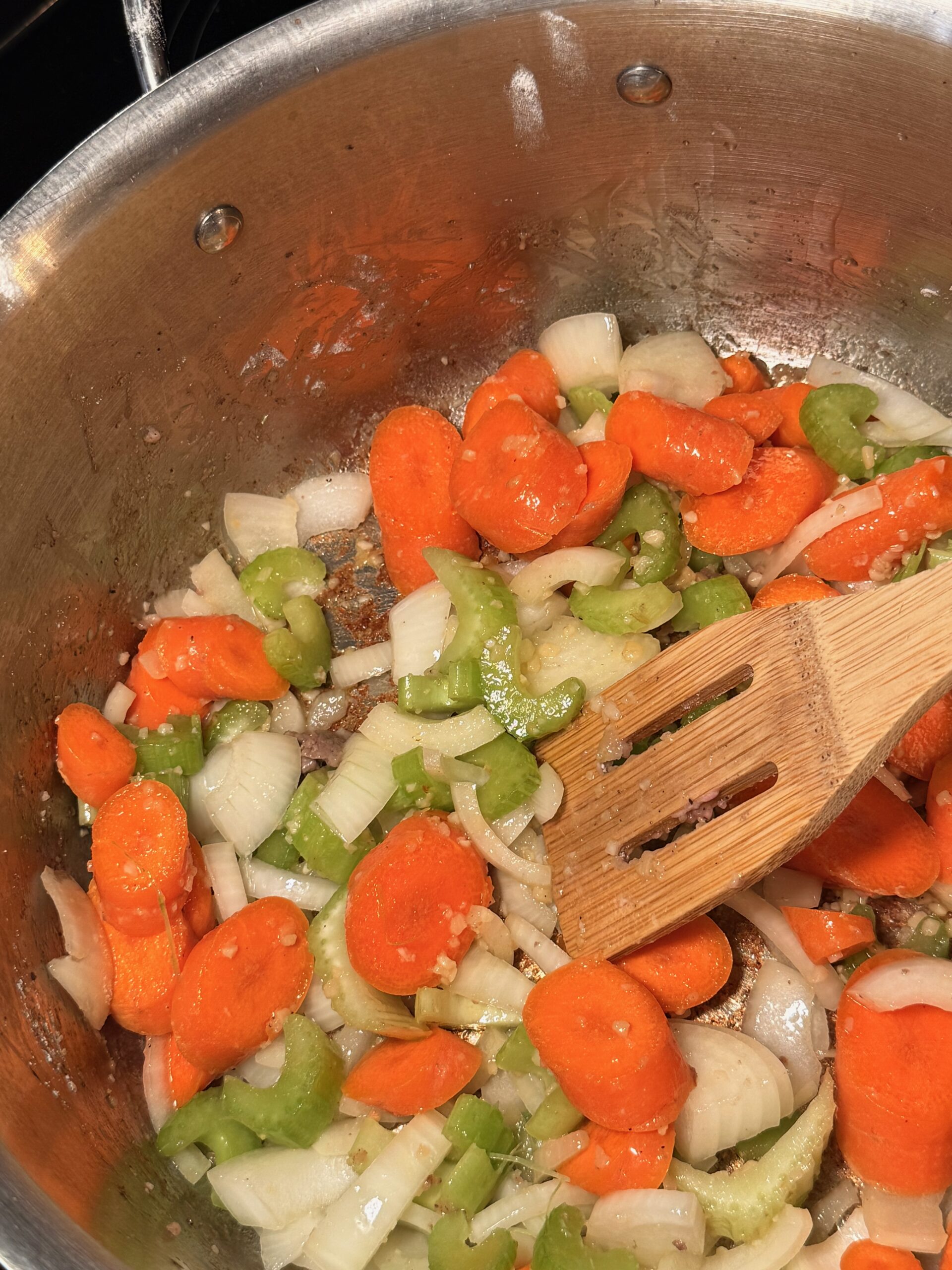
Add the diced onion, chopped carrots, and chopped celery to the pot with all the beef drippings and residual flour. Cook over medium heat for 4 to 5 minutes, stirring occasionally, until the vegetables have softened slightly and the onion is translucent.
Step 3: Add the Tomato Paste and Seasonings
Add the tomato paste directly to the vegetables. Stir and cook for 1 to 2 minutes until the paste darkens slightly in color and smells caramelized and slightly sweet rather than raw. Add the Worcestershire sauce, dried thyme, and rubbed sage and stir to combine.
Step 4: Add the Broth and Simmer
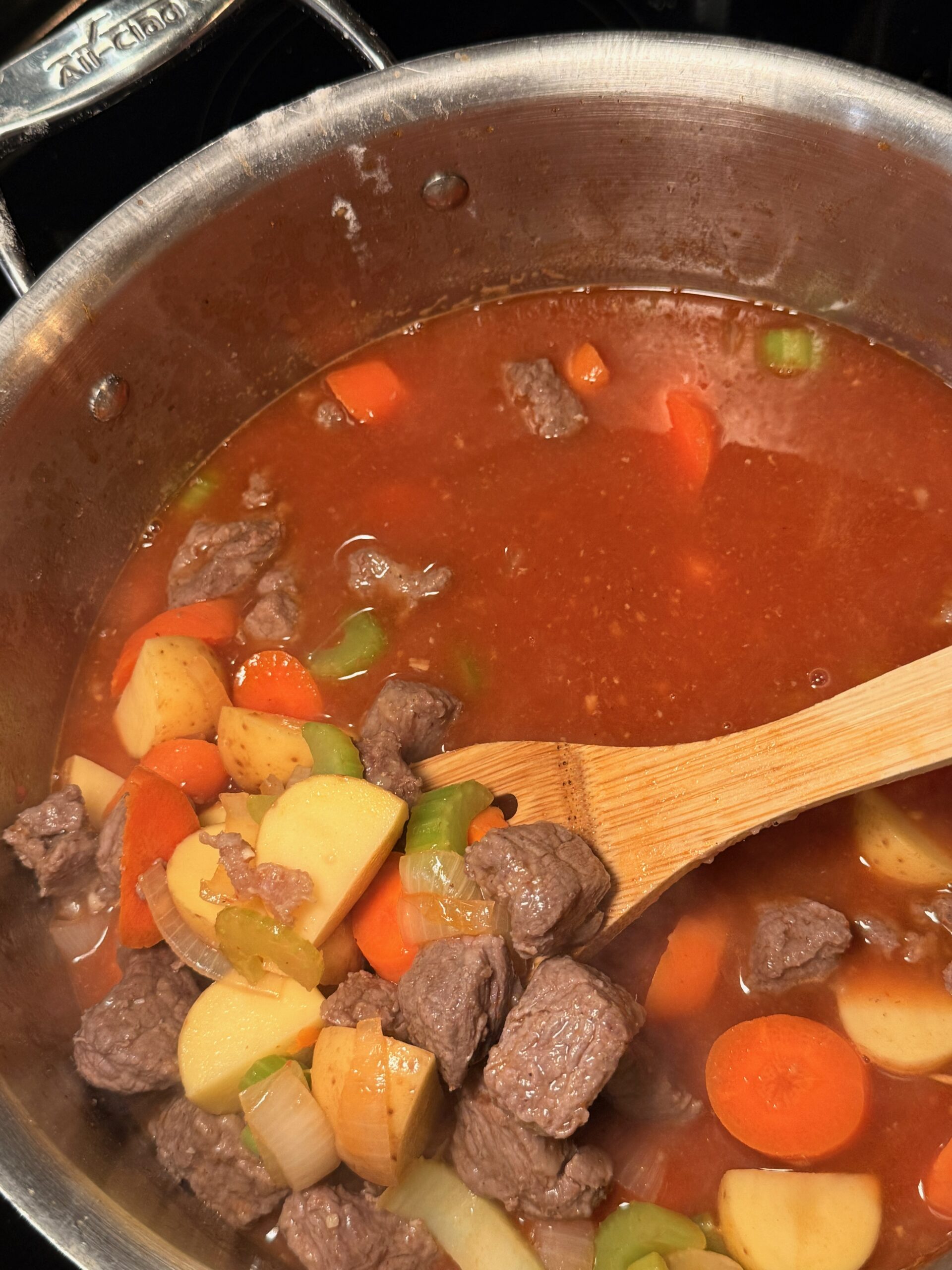
Return all the seared beef to the pot. Pour in the beef broth and stir thoroughly, scraping up every bit of the browned fond from the bottom of the pot. Those bits are concentrated flavor and every one belongs in the finished stew. Bring to a boil over medium-high heat then reduce the heat to low.
Step 5: Add the Potatoes
Add the diced baby potatoes to the pot. Stir to submerge and cover again. Simmer for 1 ½-2 hours until the potatoes are completely fork-tender and the beef yields with almost no resistance when pressed with a spoon.
Step 6: Season and Serve
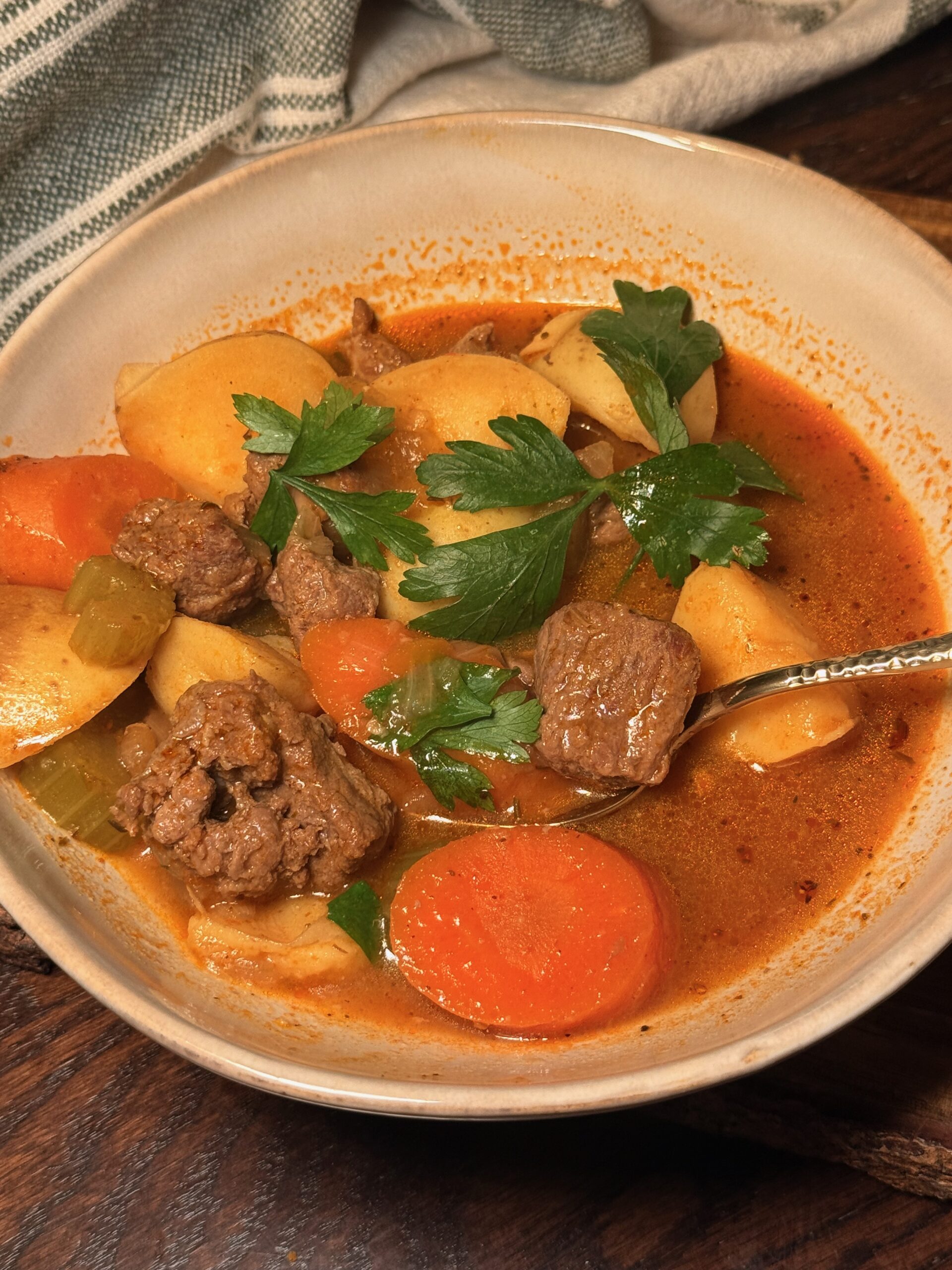
Taste the finished stew and adjust salt and pepper as needed. The broth should be rich, slightly thickened, and deeply flavorful. Serve hot directly from the pot.
Storing and Reheating
Store in a sealed airtight container in the refrigerator for up to 4 days. The stew thickens significantly as it cools and the fat from the beef may solidify on the surface when cold, which is completely normal. Reheat in a covered pot over medium-low heat with a small splash of beef broth to loosen the broth back to the right consistency, or in the microwave on medium power in 60-second intervals stirring between each.
This stew freezes beautifully for up to 3 months. Let cool completely, transfer to freezer-safe containers or bags, and freeze. Thaw overnight in the refrigerator and reheat as directed.
How to Serve Classic Beef Stew
Serve hot in wide, deep bowls with warm crusty bread or the Homemade Biscuits alongside for soaking up the rich broth. A sprinkle of fresh parsley over each bowl adds a bright, herby finish. This stew is a complete meal on its own but a simple green salad alongside rounds the dinner out without competing with the deep, savory flavors of the stew.
Frequently Asked Questions About Classic Beef Stew
Why dredge the beef in flour before searing?
The flour coating on the beef does two important jobs simultaneously. First, it creates a seasoned, slightly starchy crust on the outside of each piece of beef that caramelizes in the hot oil and produces a deeply flavored fond on the bottom of the pot that flavors the entire stew when the broth is added. Second, the flour from the coating dissolves into the broth during the long simmer and thickens it naturally into the rich, slightly glossy consistency of a properly made beef stew. Both effects happen without any additional thickening steps.
Why does the beef need to be seared in batches?
Adding too many pieces of beef to the pot at once drops the temperature of the oil significantly and creates a humid environment from the steam released by the meat. In a humid, lower-temperature environment the beef cannot develop the Maillard reaction browning that produces the caramelized crust and the fond. Instead it steams, turning pale grey rather than deeply browned. Searing in small batches maintains the oil temperature and produces properly browned beef that adds exponentially more flavor to the finished stew.
Why add the potatoes halfway through rather than at the beginning?
Potatoes become completely soft and begin to fall apart after more than 45 minutes to an hour of simmering. Adding them at the beginning of the two-hour simmer would produce potatoes that have disintegrated into the broth and lost their shape rather than holding as distinct, tender, bite-sized pieces throughout the finished stew. Adding them in the final 30 to 45 minutes cooks them to perfectly tender without overcooking them.
Can I make this in a slow cooker?
Yes. Complete the searing and vegetable sautéing steps on the stovetop, then transfer everything including the broth to a slow cooker. Cook on low for 7 to 8 hours or on high for 4 to 5 hours. Add the potatoes in the last 2 hours of the low cook or the last 1 hour of the high cook so they do not over-soften. The slow cooker version produces an equally tender, deeply flavored stew with a slightly more brothy, less thickened consistency than the stovetop version.
Why cook the tomato paste before adding the broth?
Raw tomato paste has a sharp, slightly metallic, one-dimensional flavor that is detectable in the finished stew if it goes in without any cooking. Stirring the paste into the hot vegetables and cooking it for 1 to 2 minutes caramelizes its natural sugars, removes the raw edge, and develops a deeper, sweeter, more concentrated tomato flavor that adds genuine complexity to the stew base rather than just a faint tomato background note.
How do I know when the beef is done?
The beef is done when individual pieces yield with almost no resistance when pressed gently with the back of a spoon. Properly cooked stew meat should be so tender it can be pulled apart easily with two forks or broken with the edge of a spoon without any chewing resistance. If the beef still feels firm or chewy after the full simmer time, simply cover and continue simmering for another 20 to 30 minutes. The collagen in chuck roast needs sufficient time to convert to gelatin and the full 1 hour 30 to 45 minute simmer time is the minimum for the right result.
Classic Beef Stew
Ingredients
Instructions
- Pat the stew meat dry and season generously with salt and pepper. Toss with the flour until every piece is evenly coated.
- Heat the olive oil in a large Dutch oven or heavy pot over medium-high heat. Working in batches, sear the floured beef pieces on all sides until deeply browned. Do not overcrowd the pan. Remove and set aside.
- Add the diced onion, chopped carrots, and chopped celery to the same pot. Cook for 4 to 5 minutes, stirring occasionally, until softened.
- Add the tomato paste and stir it into the vegetables. Cook for 1 to 2 minutes until the paste darkens slightly and smells caramelized.
- Add the Worcestershire sauce, thyme, and rubbed sage. Stir to combine.
- Return the seared beef to the pot. Pour in the beef broth and stir everything together, scraping up any browned bits from the bottom of the pot.
- Bring to a boil then reduce the heat to low. Cover and simmer for 1 hour.
- Add the diced baby potatoes. Cover and continue simmering for another 30 to 45 minutes until the potatoes are tender and the beef is fall-apart soft.
- Taste and adjust salt and pepper as needed. Serve hot.
Notes
- Pat the beef completely dry before flouring and searing. Moisture on the surface of the meat prevents browning and produces steamed rather than seared beef.
- Sear in batches without crowding the pan. Crowded beef steams rather than browns and the stew loses the deep, caramelized flavor that a proper sear provides.
- Cook the tomato paste for 1 to 2 minutes before adding the broth. This brief caramelization removes the raw edge and adds a concentrated depth to the finished stew.
- The flour coating on the beef thickens the stew naturally during the long simmer. No additional thickening is needed.